

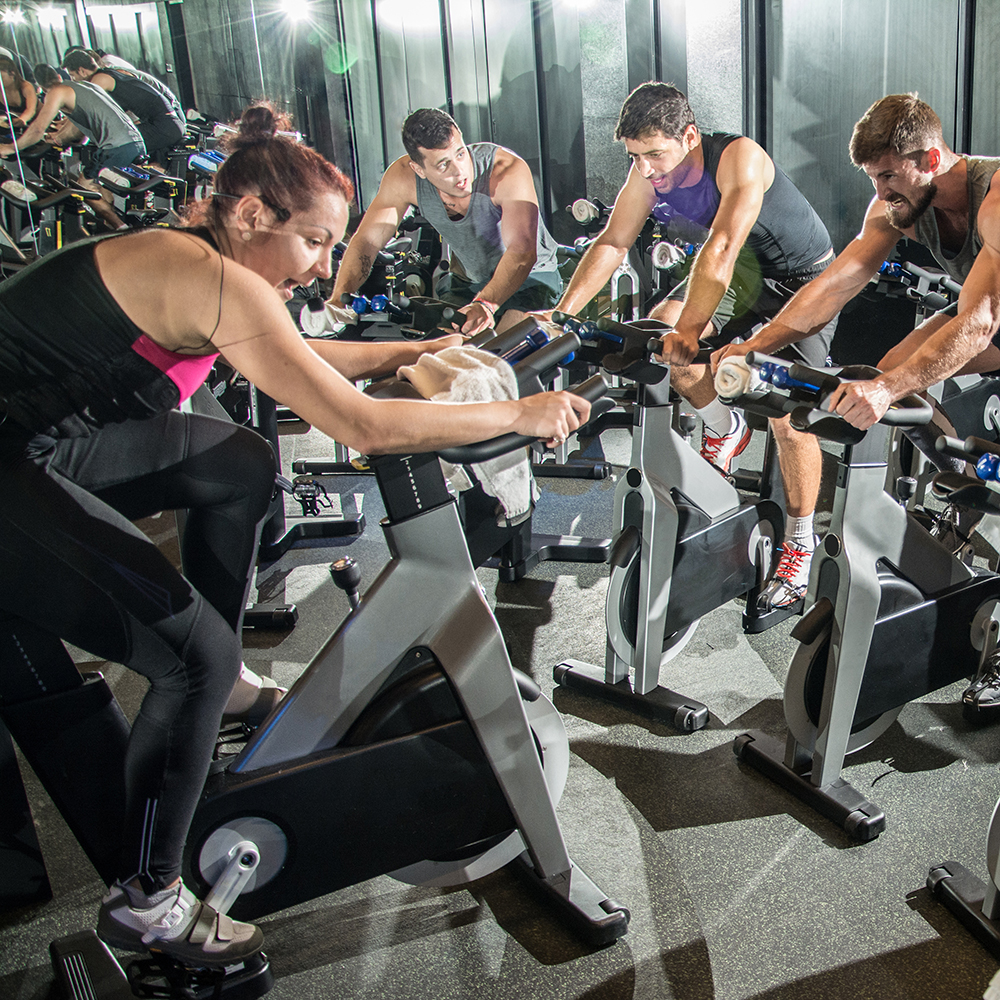
The ankle performs a small but important role during every pedal revolution. Its movement influences how the foot contacts the pedal, how the calf contributes and how comfortably force passes through the lower leg.
In spinning classes, riders sometimes exaggerate ankle position because they have heard they should push the heel down or point the toes. Neither cue should become a rigid rule. Comfort usually comes from a stable foot and a controlled ankle that can move naturally.
The Ankle Is Not Completely Fixed
Cycling involves a repeated movement in which the hip, knee and ankle coordinate.
The ankle angle changes modestly as the pedal travels through the cycle. The exact pattern differs between riders because of mobility, bike setup, cadence and individual technique.
Trying to hold the ankle in one extreme position can create tension.
The foot should remain secure while the ankle contributes naturally to the movement.
Excessive Toe Pointing Increases Calf Demand
Some riders pedal with the toes pointed sharply down throughout the class.
This may happen because the saddle is too high and the rider is reaching for the bottom of the stroke. It may also become a habit during fast cadence or heavy resistance.
A persistent toe-down position can increase calf fatigue. The participant may feel burning or tightness before the hips and thighs become tired.
The correct response is not always a calf stretch. Saddle height and foot placement should be checked first.
Forcing the Heel Down Creates Another Extreme
The cue to keep the heel down is intended to discourage excessive toe pointing.
Taken literally, it can cause riders to force the heel below a comfortable position. This may create tension through the ankle, calf or back of the leg.
A slight heel drop may occur naturally during part of the pedal cycle. It should not be imposed aggressively.
Riders need a stable, comfortable ankle rather than a visually perfect angle.
Saddle Height Influences Ankle Behaviour
A high saddle can cause the rider to reach through the toes.
Visible signs may include pelvic rocking, downward-pointed toes and unstable contact near the bottom of the stroke.
A low saddle may create excessive knee and hip flexion and change how the rider presses through the foot.
Setup should allow the rider to maintain a slight knee bend near the bottom while keeping the pelvis stable.
Foot Placement Affects Ankle Comfort
When the foot sits too far forwards or backwards in the pedal cage, the ankle may compensate.
A foot positioned very shallowly can make the rider feel as though pressure is concentrated through the toes. A foot pushed too deeply may place the pedal beneath the arch and change leverage.
The broad forefoot area should feel securely supported.
Straps should prevent slipping without compressing the foot.
Cadence Changes the Movement
Fast cadence gives the rider less time to organise each pedal stroke.
If resistance is too low, the ankle may become loose and uncontrolled. The feet appear to flick through the bottom of the cycle.
High resistance creates a different problem. The rider may point the toes and use the calves aggressively to force the pedals around.
Cadence, resistance and ankle control must be considered together.
Standing Places More Weight Through the Feet
When the rider leaves the saddle, body weight transfers towards the pedals.
The ankles must help stabilise the standing position while the legs continue producing force.
Insufficient resistance may make the rider feel unsupported. Excessive resistance can create a heavy, grinding movement.
The feet should remain level enough to feel stable, but there is no need to freeze the ankle.
Shoes Influence Pressure and Movement
Very soft shoes may bend around the pedal and concentrate pressure under the foot. Loose shoes can allow unwanted movement.
A stable training shoe often provides better support for cage pedals. Cycling shoes may create a more secure connection when compatible cleats are used.
Shoe fit matters. Tight toe boxes can contribute to numbness, while worn soles may reduce stability.
New footwear should be tested before a demanding class.
Ankle Mobility Is Only Part of the Picture
Limited ankle mobility may affect comfort, but more flexibility is not automatically the answer.
Some riders have adequate movement but lack control under speed or resistance. Others experience symptoms because of bike fit or footwear.
Random stretching can miss the real issue.
A useful assessment considers mobility, strength, setup, training load and symptom history together.
Calf and Lower-Leg Capacity
The calf muscles work repeatedly during cycling.
Strength training can improve their ability to tolerate load. Controlled straight-knee and bent-knee calf raises may be useful, depending on the participant.
Balance exercises and lower-leg strengthening can support control as well.
Progress should be gradual, especially when cycling is combined with running, jumping or dance classes.
Warning Signs Should Not Be Ignored
Temporary calf fatigue is different from sharp or persistent pain.
Participants should seek assessment for symptoms such as:
- Sudden ankle pain
- Swelling
- Persistent numbness
- Weakness
- Localised Achilles pain
- Inability to bear weight normally
A class modification cannot diagnose or treat the cause.
Pain should not be used as feedback that the ankle is becoming stronger.
A Better Pre-Class Setup
Riders can improve ankle comfort by checking the whole chain.
Set the saddle, secure both feet evenly and pedal slowly. Observe whether the hips rock or the toes reach down excessively.
Increase cadence gradually during the warm-up. If ankle position changes sharply, reassess resistance and setup.
Members at True Fitness Singapore can ask for basic bike-adjustment guidance rather than waiting for discomfort to become severe.
Comfort Comes From Adaptable Control
The ankle should not be forced into one universal position throughout a spin class.
It needs enough stability to transfer force and enough natural movement to accommodate the pedal cycle.
When the saddle, shoe and foot position are appropriate, riders can usually stop thinking about the ankle. It becomes one coordinated part of the movement rather than the place where discomfort accumulates.
Frequently Asked Questions
Should my heel remain below my toes while pedalling?
Not throughout the entire cycle. Avoid forcing an extreme angle and allow the ankle to move naturally.
Why do my calves become tired before my thighs?
Excessive toe pointing, saddle height, heavy resistance or limited calf endurance may contribute.
Can poor foot position cause ankle pain?
Yes. Foot depth, strap pressure, shoe support and cleat alignment can all affect ankle comfort.
Should I stretch my calves before class?
A progressive warm-up is generally more useful than aggressive stretching. Individual mobility needs vary.
When should ankle discomfort be professionally assessed?
Seek assessment when pain is sharp, worsening, associated with swelling or weakness, or continues outside class.

Comments are closed.